

Introduction
The landscape of intelligent systems has transformed dramatically over the past decade, fundamentally changing how organizations approach complex problem-solving. Modern computational frameworks now possess sophisticated capabilities that enable them to process vast amounts of information, identify patterns, and generate actionable insights with minimal human intervention. At the heart of this transformation lies the convergence of AI decision making and automated reasoning, two complementary technologies that work in tandem to create systems capable of evaluating scenarios, weighing alternatives, and selecting optimal courses of action. These technologies are reshaping industries from healthcare to finance, offering unprecedented opportunities to enhance efficiency, reduce errors, and unlock new possibilities that were previously beyond reach.

Core Analysis
The foundation of intelligent computational systems rests on their ability to process information through logical frameworks and probabilistic models. These systems employ multiple layers of analysis, combining pattern recognition with rule-based logic to navigate complex scenarios. Machine learning algorithms enable systems to improve their performance over time, learning from historical data and outcomes to refine their predictive capabilities.
Neural networks and deep learning architectures provide the computational muscle for processing unstructured data, while symbolic logic systems offer transparency and explainability in how conclusions are reached. The integration of AI decision making and automated reasoning creates a powerful synergy where data-driven insights meet logical inference, allowing systems to handle both quantitative analysis and qualitative judgment.
Key components of these intelligent systems include:
– Knowledge representation frameworks that structure information in ways machines can process and manipulate
– Inference engines that apply logical rules to derive new conclusions from existing knowledge
– Probabilistic models that quantify uncertainty and assess risk across multiple scenarios
– Optimization algorithms that identify the best solutions among countless alternatives
– Natural language processing capabilities that extract meaning from human communication
These systems operate through continuous cycles of perception, analysis, and action. They gather data from various sources, apply analytical frameworks to interpret that information, generate potential solutions, evaluate those options against defined criteria, and select the most appropriate response. The sophistication of modern algorithms allows for real-time processing, enabling split-second determinations in dynamic environments.
The mathematical foundations underlying these systems draw from probability theory, game theory, optimization theory, and formal logic. Bayesian networks help quantify uncertainty, while constraint satisfaction algorithms ensure solutions meet specified requirements. Reinforcement learning techniques enable systems to learn optimal strategies through trial and error, gradually improving their performance in complex, multi-step scenarios.
Use Cases & Applications
Intelligent computational systems have found practical applications across virtually every industry sector. In healthcare, these technologies assist clinicians by analyzing medical imaging, predicting patient outcomes, and recommending treatment protocols based on vast databases of clinical research and patient histories. Diagnostic support systems can identify patterns in symptoms and test results that might escape human notice, while drug discovery platforms accelerate the identification of promising therapeutic compounds.
Financial institutions leverage these capabilities for fraud detection, credit risk assessment, algorithmic trading, and portfolio optimization. Systems monitor millions of transactions in real-time, flagging suspicious patterns and preventing fraudulent activities before they cause significant damage. Investment platforms analyze market conditions, economic indicators, and company fundamentals to generate trading strategies and asset allocation recommendations.
Manufacturing operations employ intelligent systems for quality control, predictive maintenance, supply chain optimization, and production scheduling. Sensors throughout facilities generate continuous streams of data that algorithms analyze to predict equipment failures, optimize energy consumption, and minimize waste. Autonomous robots coordinate their activities to maximize throughput while adapting to changing conditions on the factory floor.
Transportation and logistics companies utilize these technologies for route optimization, demand forecasting, and fleet management. Delivery networks calculate optimal paths considering traffic patterns, weather conditions, delivery windows, and vehicle capacity constraints. Autonomous vehicles rely on sophisticated perception and planning systems to navigate safely through complex environments.
Customer service operations integrate intelligent chatbots and virtual assistants that handle routine inquiries, troubleshoot technical issues, and escalate complex cases to human agents. These systems understand natural language, maintain conversation context, and access knowledge bases to provide accurate, helpful responses.
Challenges & Limitations
Despite their impressive capabilities, intelligent computational systems face significant challenges that limit their effectiveness and adoption. The “black box” problem remains a critical concern, particularly in high-stakes domains where understanding the rationale behind conclusions is essential. Many advanced machine learning models operate through complex mathematical transformations that are difficult for humans to interpret, raising questions about accountability and trust.
Data quality and availability present fundamental obstacles. These systems require large volumes of high-quality training data to perform reliably, yet such data is often scarce, biased, or incomplete. Historical biases embedded in training data can perpetuate or amplify discrimination, leading to unfair outcomes for certain groups. Ensuring fairness, transparency, and ethical behavior remains an active area of research and concern.
Computational requirements can be substantial, particularly for training large-scale models. The energy consumption and environmental impact of training sophisticated systems has drawn increasing scrutiny. Organizations must balance performance gains against resource costs and sustainability considerations.
Robustness and reliability issues arise when systems encounter situations that differ significantly from their training environments. Adversarial examples—carefully crafted inputs designed to fool algorithms—demonstrate vulnerabilities that could be exploited maliciously. Ensuring systems behave safely and predictably across the full range of possible scenarios remains challenging.
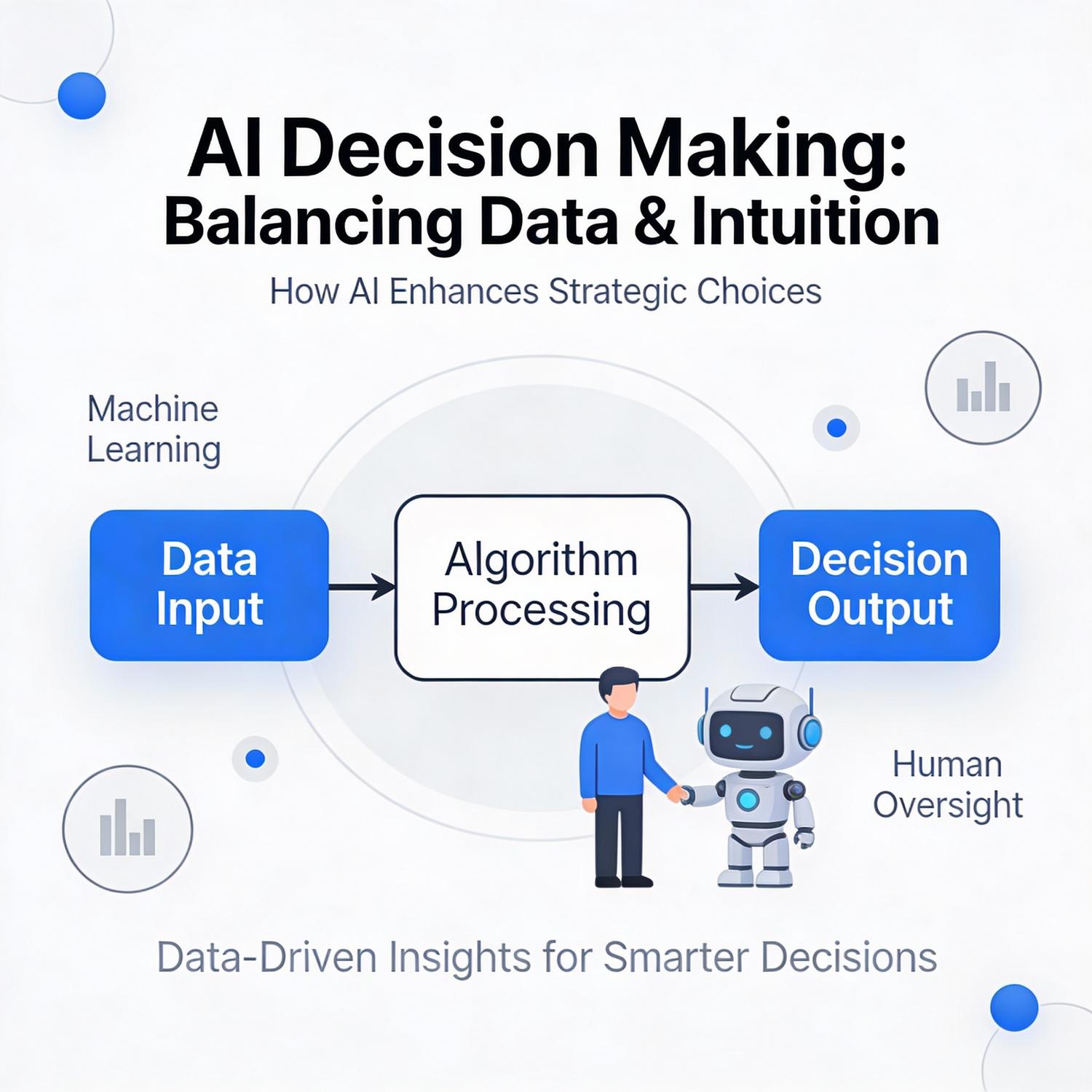
Integration with existing organizational processes and systems requires careful planning and change management. Human workers may resist adoption due to concerns about job displacement or lack of understanding about how these technologies work. Establishing appropriate human oversight and intervention mechanisms is crucial but complex.
Future Outlook
The trajectory of intelligent computational systems points toward increasingly sophisticated capabilities and broader adoption across sectors. Advances in explainable methods promise to make complex models more transparent and interpretable, addressing current concerns about accountability and trust. Researchers are developing techniques that provide human-understandable explanations for system outputs while maintaining high performance.
Hybrid approaches that combine multiple methodological paradigms show particular promise. Systems that integrate neural networks with symbolic reasoning can leverage the pattern recognition strengths of machine learning while maintaining the transparency and logical rigor of rule-based systems. These architectures may offer the best of both worlds—powerful performance with interpretable outputs.
Edge computing and distributed processing will enable intelligent capabilities to operate on devices with limited connectivity, reducing latency and privacy concerns. Rather than sending all data to centralized cloud servers, devices will perform sophisticated analysis locally, transmitting only essential information.
Continued progress in transfer learning and few-shot learning will reduce data requirements, enabling systems to adapt to new domains with minimal training examples. Meta-learning approaches that teach systems “how to learn” promise to accelerate adaptation and generalization across diverse tasks.
Regulatory frameworks and industry standards are emerging to govern the development and deployment of these technologies. Guidelines addressing safety, fairness, privacy, and accountability will shape how organizations implement intelligent systems. Professional certifications and best practices will mature, establishing clearer expectations for responsible development.
The integration of AI decision making and automated reasoning will deepen, creating systems that seamlessly blend data-driven insights with logical inference. This convergence will enable more nuanced, context-aware capabilities that better mirror human cognitive processes while exceeding human performance in specific domains.
Conclusion
Intelligent computational systems represent a fundamental shift in how organizations approach complex challenges and opportunities. The sophisticated interplay between AI decision making and automated reasoning has created powerful tools capable of processing information, evaluating alternatives, and generating insights at unprecedented scale and speed. While significant challenges remain—including concerns about transparency, fairness, and reliability—ongoing research and development efforts continue to address these limitations. As these technologies mature and integrate more deeply into organizational workflows, they promise to augment human capabilities rather than replace them, enabling people to focus on higher-level strategic thinking while systems handle routine analysis and optimization. The future will likely see increasingly sophisticated hybrid systems that combine the strengths of multiple approaches, delivering both powerful performance and interpretable outputs that humans can understand and trust.


Leave a Reply