

Introduction
The landscape of artificial intelligence has undergone a remarkable transformation in recent years, shifting from the exclusive domain of data scientists and software engineers to becoming accessible to business professionals, entrepreneurs, and domain experts without technical backgrounds. This democratization represents one of the most significant shifts in modern technology adoption. The emergence of no-code AI agent development platforms has fundamentally changed how organizations approach intelligent automation, enabling teams to build sophisticated AI-powered solutions without writing a single line of code. Simultaneously, AgenticAutomation has evolved from a theoretical concept into a practical framework that empowers businesses to deploy autonomous systems capable of decision-making, task execution, and continuous learning.

Core Analysis
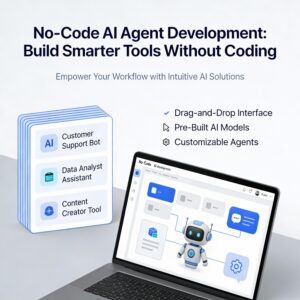
The convergence of no-code AI agent development and AgenticAutomation represents a paradigm shift in how businesses implement intelligent systems. Traditional development approaches required extensive programming knowledge, machine learning expertise, and significant time investment. Modern visual development environments have eliminated these barriers by providing intuitive interfaces where users can design, configure, and deploy autonomous agents through drag-and-drop components and pre-built templates.
These platforms leverage several foundational technologies that work in concert to deliver powerful capabilities. Natural language processing enables agents to understand and respond to human communication with remarkable accuracy. Machine learning models, pre-trained on vast datasets, can be fine-tuned for specific business contexts without requiring deep technical knowledge. Integration frameworks allow seamless connection to existing business systems, databases, and third-party services.
The architecture of these solutions typically consists of several key layers. The presentation layer offers visual interfaces for designing workflows and defining agent behaviors. The logic layer processes decisions based on rules, patterns, and learned behaviors. The integration layer connects to data sources and external systems. The execution layer manages task performance and monitors outcomes. This layered approach ensures that complexity remains hidden from end users while maintaining flexibility and scalability.
Visual workflow builders have become particularly sophisticated, enabling users to map complex decision trees, conditional logic, and multi-step processes without coding. These tools often include pre-configured templates for common business scenarios such as customer service, data processing, lead qualification, and document management. Users can customize these templates to match their specific requirements, adjusting parameters, adding custom logic, and defining success metrics.
The intelligence layer within these platforms has advanced considerably. Modern systems incorporate conversational AI that can engage in nuanced dialogue, understanding context, intent, and sentiment. They employ reasoning engines that can evaluate multiple factors simultaneously to make informed decisions. Memory systems allow agents to retain information across interactions, creating continuity and personalization. Learning mechanisms enable continuous improvement based on feedback and outcomes.
Use Cases & Applications
Customer support represents one of the most mature application areas for autonomous intelligent systems. Organizations deploy conversational agents that handle routine inquiries, troubleshoot common issues, escalate complex problems to human specialists, and maintain detailed interaction histories. These systems operate across multiple channels including websites, mobile applications, messaging platforms, and voice interfaces, providing consistent experiences regardless of touchpoint.
Sales and marketing teams utilize intelligent agents for lead qualification, prospect engagement, and personalized outreach. These systems analyze behavioral data to identify high-potential opportunities, engage prospects with relevant content, schedule meetings with sales representatives, and nurture relationships through automated yet personalized communication sequences. The ability to operate continuously without human intervention ensures no opportunity falls through the cracks.
Operations and workflow optimization benefit significantly from autonomous process management. Intelligent agents monitor business processes, identify bottlenecks, allocate resources dynamically, and execute routine tasks with precision. In supply chain management, they track inventory levels, predict demand fluctuations, coordinate with suppliers, and optimize logistics. In human resources, they screen candidates, schedule interviews, onboard new employees, and manage routine administrative tasks.
Data analysis and reporting have been transformed by agents capable of collecting information from disparate sources, identifying patterns and anomalies, generating insights, and presenting findings in accessible formats. Financial services organizations use these systems for fraud detection, risk assessment, compliance monitoring, and investment analysis. Healthcare providers employ them for patient triage, appointment scheduling, medication reminders, and preliminary diagnostics.
Content creation and management represent emerging application areas where intelligent systems assist with generating written material, curating relevant information, optimizing content for specific audiences, and managing publication workflows. E-commerce businesses leverage these capabilities for product description generation, personalized recommendations, inventory management, and customer engagement.
Challenges & Limitations
Despite significant advances, several challenges persist in the deployment of visual development platforms for intelligent systems. Data quality and availability remain fundamental concerns. Autonomous agents require access to accurate, comprehensive, and current information to function effectively. Organizations often struggle with fragmented data across legacy systems, inconsistent formatting, and incomplete records. Addressing these issues requires substantial effort in data consolidation and governance.
Integration complexity presents another significant hurdle. While platforms offer numerous pre-built connectors, organizations frequently need to interface with custom applications, proprietary systems, and legacy infrastructure. Achieving seamless integration often requires technical expertise that contradicts the promise of accessibility for non-technical users. Security and authentication protocols add additional layers of complexity.
Performance and scalability considerations become critical as deployments grow. Systems that function well with limited users or simple workflows may struggle under production loads. Response times can degrade, accuracy may suffer, and maintenance requirements increase. Organizations must carefully evaluate platform capabilities against anticipated growth trajectories and peak demand scenarios.
Governance and control mechanisms require careful attention. As autonomous systems gain decision-making authority, organizations need robust frameworks for monitoring behavior, auditing decisions, ensuring compliance with regulations, and maintaining ethical standards. Establishing appropriate boundaries between automated and human decision-making remains an ongoing challenge.
The learning curve, while reduced compared to traditional development, still exists. Users need to understand fundamental concepts around logic, workflows, data structures, and system design. Organizations must invest in training and change management to ensure successful adoption. Resistance from technical teams who perceive these tools as threats to their roles can create organizational friction.
Cost considerations extend beyond platform licensing. While visual development tools reduce development expenses, they introduce ongoing subscription costs, usage-based fees, and potential vendor lock-in. Organizations must evaluate total cost of ownership including training, maintenance, integration, and potential migration costs.
Future Outlook
The trajectory of visual development platforms for intelligent systems points toward increasing sophistication and accessibility. Advances in foundation models will enable more capable agents with broader knowledge and improved reasoning abilities. These systems will better understand nuanced instructions, handle ambiguous situations, and adapt to novel scenarios without extensive configuration.
Multi-agent collaboration represents an emerging frontier where multiple specialized systems work together to accomplish complex objectives. Rather than single monolithic agents, organizations will deploy ecosystems of specialized agents that communicate, coordinate, and collaborate. This approach mirrors human organizational structures and promises greater flexibility and resilience.
Personalization and adaptation will reach new levels as systems develop deeper understanding of individual users, organizational contexts, and evolving requirements. Agents will automatically adjust their behavior based on feedback, outcomes, and changing conditions. This dynamic adaptation will reduce configuration burden and improve performance over time.
Ethical AI and transparency will receive greater emphasis as regulatory frameworks mature and societal expectations evolve. Platforms will incorporate built-in safeguards, explainability features, and bias detection mechanisms. Organizations will demand greater visibility into how agents make decisions and assurance that systems operate within acceptable parameters.
Industry-specific solutions will proliferate as platform providers and partners develop specialized templates, pre-trained models, and vertical-specific capabilities. Healthcare, finance, manufacturing, retail, and other sectors will benefit from purpose-built solutions that address unique requirements and regulatory constraints.
The boundary between visual development and traditional coding will blur as platforms incorporate hybrid approaches. Power users will access underlying code for customization while maintaining visual interfaces for standard configurations. This flexibility will accommodate diverse skill levels and use cases within single platforms.
Conclusion
The maturation of no-code AI agent development platforms and the practical implementation of AgenticAutomation have fundamentally altered the technology landscape. Organizations of all sizes can now deploy sophisticated intelligent systems without extensive technical resources, accelerating digital transformation and enabling innovation at unprecedented scale. While challenges around data quality, integration complexity, and governance persist, the trajectory clearly favors increasing accessibility and capability. The future promises even more powerful tools that combine ease of use with advanced functionality, enabling a new generation of autonomous systems that augment human capabilities across every business function. As these technologies continue evolving, the competitive advantage will increasingly belong to organizations that effectively harness visual development platforms to build intelligent agents aligned with strategic objectives and operational requirements.


Leave a Reply