

Introduction
The landscape of artificial intelligence is undergoing a remarkable transformation, shifting from complex programming environments to accessible platforms that democratize technology creation. Organizations and individuals are discovering new ways to harness machine intelligence without writing a single line of code. This evolution represents a fundamental change in how we approach intelligent automation, making sophisticated capabilities available to business analysts, product managers, and domain experts who previously relied entirely on development teams.
The convergence of no-code AI agent development and AI agentic workflows autonomous AI agents, building AI agents no-code has emerged as a defining trend in enterprise technology adoption. Visual development environments now enable users to design, configure, and deploy intelligent systems that can reason, make decisions, and execute tasks with minimal technical expertise. This accessibility is reshaping organizational structures, accelerating innovation cycles, and creating opportunities for rapid experimentation with intelligent automation solutions across industries.

Core Analysis
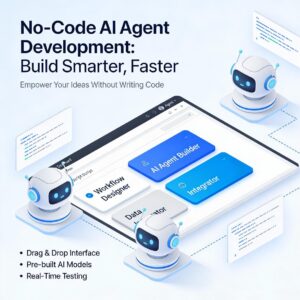
The fundamental architecture of modern visual development platforms centers on abstraction layers that hide computational complexity behind intuitive interfaces. These platforms provide pre-built components, drag-and-drop functionality, and configuration panels that translate user intentions into executable logic. The underlying technology stack typically includes natural language processing engines, decision trees, integration frameworks, and orchestration layers that coordinate multiple intelligent components working in concert.
What distinguishes contemporary platforms is their ability to support sophisticated reasoning patterns without requiring traditional programming knowledge. Users can define conditional logic, establish data processing pipelines, and configure response behaviors through graphical interfaces. The relationship between no-code AI agent development and AI agentic workflows autonomous AI agents, building AI agents no-code reflects a maturation of both interface design and underlying AI capabilities that make complex behaviors configurable rather than programmable.
Platform architectures generally incorporate several key components that enable this accessibility. Template libraries offer starting points for common scenarios, reducing initial configuration time. Integration marketplaces provide connections to data sources, communication channels, and business systems. Training interfaces allow users to refine behavior through examples rather than algorithms. Monitoring dashboards surface performance metrics and enable continuous improvement without diving into system logs or debugging code.
The intelligence layer itself has evolved significantly, moving from rigid rule-based systems to adaptive models that learn from interactions. Modern platforms leverage large language models, retrieval-augmented generation, and multi-step reasoning capabilities that were previously accessible only through custom development. These capabilities are packaged as configurable modules that users can combine, adjust, and deploy according to specific business requirements.
Use Cases & Applications
Customer service automation represents one of the most mature application areas, where intelligent systems handle inquiries, resolve common issues, and escalate complex cases to human specialists. Organizations deploy these solutions across multiple channels simultaneously, maintaining consistent responses while adapting to customer context and history. The systems can access knowledge bases, transaction records, and product information to provide informed assistance without human intervention.
Sales and marketing teams utilize intelligent automation for lead qualification, personalized outreach, and prospect nurturing. These systems analyze engagement patterns, score opportunities based on behavior, and trigger appropriate follow-up actions. By automating routine interactions, sales professionals focus their energy on high-value conversations while maintaining consistent communication with broader prospect pools.
Operational efficiency improvements emerge across back-office functions including invoice processing, expense management, and compliance monitoring. Intelligent systems extract information from documents, validate data against business rules, and route items for approval or exception handling. This automation reduces processing time, minimizes errors, and frees knowledge workers to focus on judgment-intensive activities.
Human resources departments implement intelligent assistants for employee onboarding, benefits enrollment, and policy guidance. These systems provide instant answers to common questions, guide employees through multi-step processes, and ensure consistent application of organizational policies. The technology scales support capabilities without proportional increases in HR staff.
Research and analysis functions benefit from systems that monitor information sources, summarize findings, and identify relevant insights. These intelligent assistants can track competitor activities, regulatory changes, or market trends, delivering curated updates to decision-makers. The technology augments human analytical capabilities rather than replacing expert judgment.
Challenges & Limitations
Despite significant advances, current platforms face meaningful constraints that organizations must consider during implementation planning. Customization depth remains limited compared to coded solutions, with users sometimes encountering scenarios that fall outside platform capabilities. While templates and modules cover common use cases effectively, highly specialized requirements may still necessitate traditional development approaches or platform extensions.
Integration complexity can present obstacles when connecting to legacy systems, proprietary databases, or custom applications. While platforms offer extensive connector libraries, organizations with unique technology stacks may require additional integration work. Data security and privacy considerations become particularly important when intelligent systems access sensitive information across multiple systems.
Performance optimization and scalability management require understanding that visual interfaces may obscure. As deployment volumes increase, organizations need visibility into resource consumption, response times, and cost implications. Platform limitations on concurrent operations, data processing volumes, or API call rates can impact production deployments.
Governance and quality control present ongoing challenges as non-technical users gain creation capabilities. Organizations must establish review processes, testing protocols, and deployment standards to maintain system reliability. Without proper oversight, proliferation of similar solutions, inconsistent behaviors, or conflicting logic can emerge across different departments.
Vendor dependency creates strategic considerations around platform lock-in, pricing changes, and feature evolution. Organizations investing heavily in specific platforms must evaluate long-term viability, migration pathways, and contingency plans. The abstraction that enables accessibility can also make it difficult to extract and redeploy logic if platform transitions become necessary.
Future Outlook
The trajectory of visual development platforms points toward increasingly sophisticated capabilities delivered through progressively simpler interfaces. Emerging platforms are incorporating multi-modal interactions, enabling systems that process images, audio, and video alongside text. This expansion allows intelligent automation to address broader categories of work that previously required human perception and interpretation.
Collaborative intelligence represents an evolving paradigm where multiple specialized systems work together on complex tasks. Rather than monolithic solutions, organizations will orchestrate networks of focused capabilities that coordinate through shared context and objectives. This architectural approach mirrors human team structures, with different specialized roles contributing to collective outcomes.
Personalization and adaptation capabilities will advance as systems learn from organizational patterns, user preferences, and outcome data. Rather than static configurations, intelligent systems will continuously refine their behaviors based on effectiveness signals. This evolution moves platforms from deployment tools toward learning environments that improve over time.
Industry-specific solutions will proliferate as platform providers develop specialized modules, templates, and integrations for particular sectors. Healthcare, financial services, manufacturing, and other domains will see tailored offerings that incorporate regulatory requirements, industry terminology, and common workflows. This specialization will accelerate adoption by reducing configuration effort and ensuring compliance with sector standards.
The boundary between visual development and traditional coding will continue to blur as platforms incorporate code extension points, custom logic modules, and hybrid development models. This convergence will enable organizations to leverage accessibility for standard scenarios while applying technical expertise where unique requirements justify the investment.
Conclusion
The democratization of intelligent automation through accessible development platforms represents a significant shift in how organizations approach technology implementation. By removing programming barriers, these solutions enable domain experts to directly translate their knowledge into operational systems. This transformation accelerates innovation, reduces dependency on scarce technical resources, and creates opportunities for rapid experimentation across business functions.
The continued evolution of no-code AI agent development and AI agentic workflows autonomous AI agents, building AI agents no-code will reshape organizational capabilities and competitive dynamics. Companies that effectively leverage these platforms can respond more quickly to market changes, scale operations efficiently, and empower employees with intelligent assistance. Success requires balancing accessibility with governance, enthusiasm with strategic planning, and automation with human judgment.
As platforms mature and capabilities expand, the distinction between technical and business roles will continue to evolve. The future belongs to organizations that cultivate hybrid skills, combining domain expertise with technological literacy. By embracing accessible development tools while maintaining rigorous standards for quality, security, and performance, enterprises can harness the full potential of intelligent automation while managing inherent risks and limitations.



Leave a Reply